When someone asks an AI engine which mascara lasts all day or which hotel program is worth joining, the answer aggregates what other people have said. Creators, experts, and customers supply much of that content. Brands that still plan creator programs for reach and engagement alone are leaving those answers to someone else.
We analyzed more than 4.7 million AI citations across beauty, fashion, and hospitality to see how creator and customer content shows up in AI answers. We cover our key findings below, followed by eight tactics for integrating creator and answer engine optimization (AEO) work into one program.
Six Key Insights on Creator Content and AI Search
1. Customer and creator content goes beyond social media
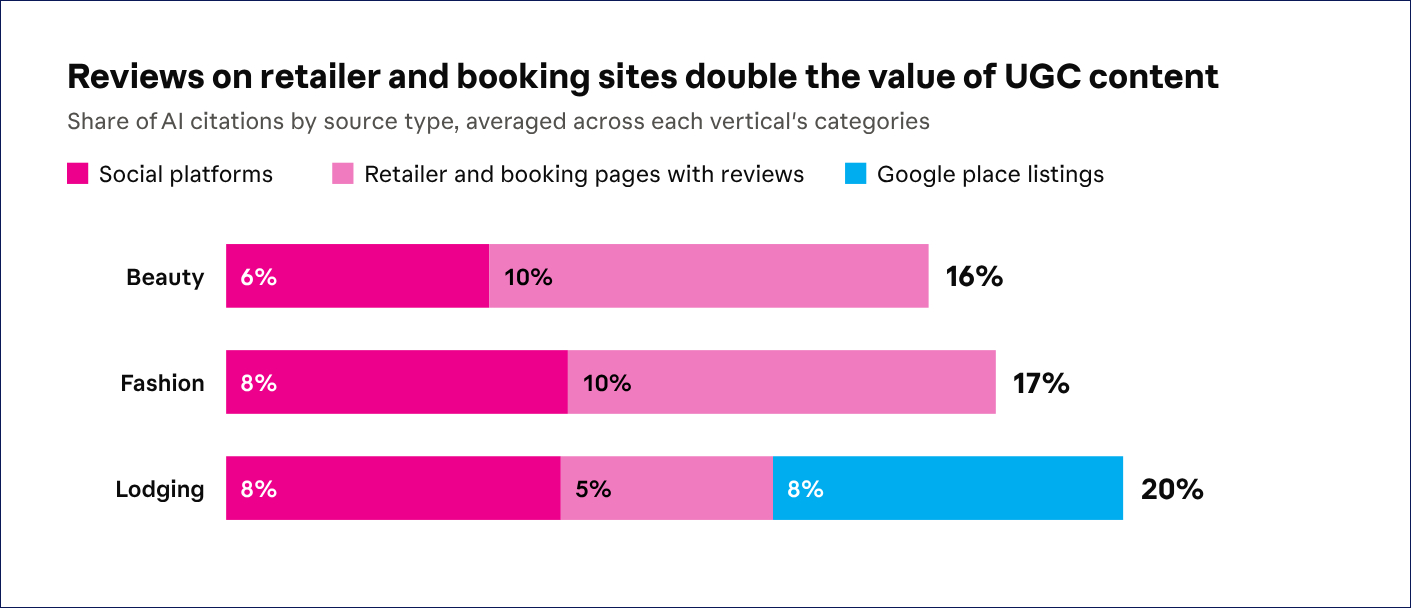
Social platforms account for 6% to 8% of citations in these categories. Add retailer product pages that carry customer reviews, and the share more than doubles to 16% to 20%.
2. Reviews count where engines already look
Standalone review sites barely register in beauty and fashion. Amazon, Ulta, and Sephora product pages carry the majority of the weight, and Google’s own place listings earn 10% to 12% of citations in the hospitality category.
3. Brand channels answer “how”; creators answer “which”
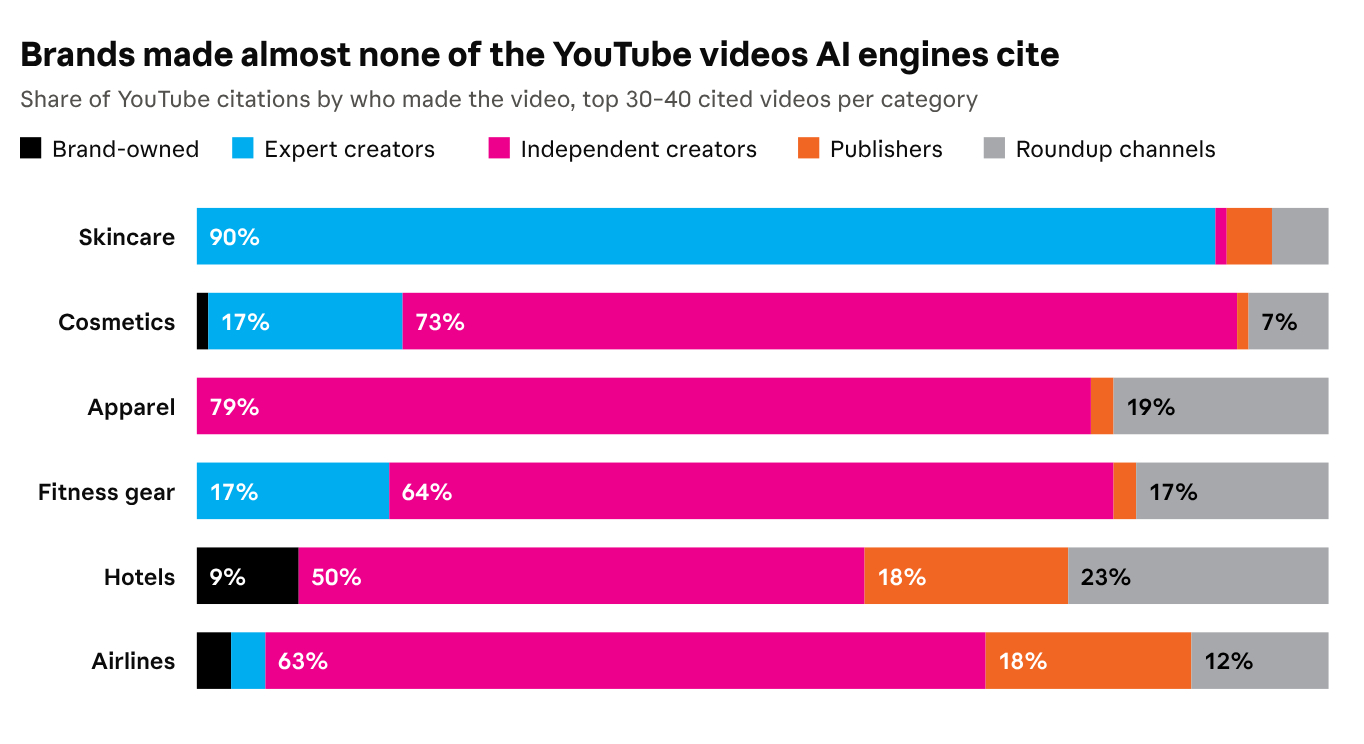
In hospitality, brand videos earned 7% of video citations, and every one explained the brand’s own loyalty program. Meanwhile, out of roughly 170 cited beauty and fashion videos, just one came from a brand’s own channel.
4. Who gets cited depends on what people are asking
When people ask AI whether a skincare product works, 90% of the YouTube citations go to dermatologists and other credentialed experts. When they ask how makeup or clothing looks and wears, everyday creators earn most of the citations, with 73% in makeup and 79% in apparel. In every category, the cited videos are mostly reviews, rankings, and side-by-side comparisons, at 55% to 65%.
5. Creator videos get cited on decision questions and rarely on factual ones
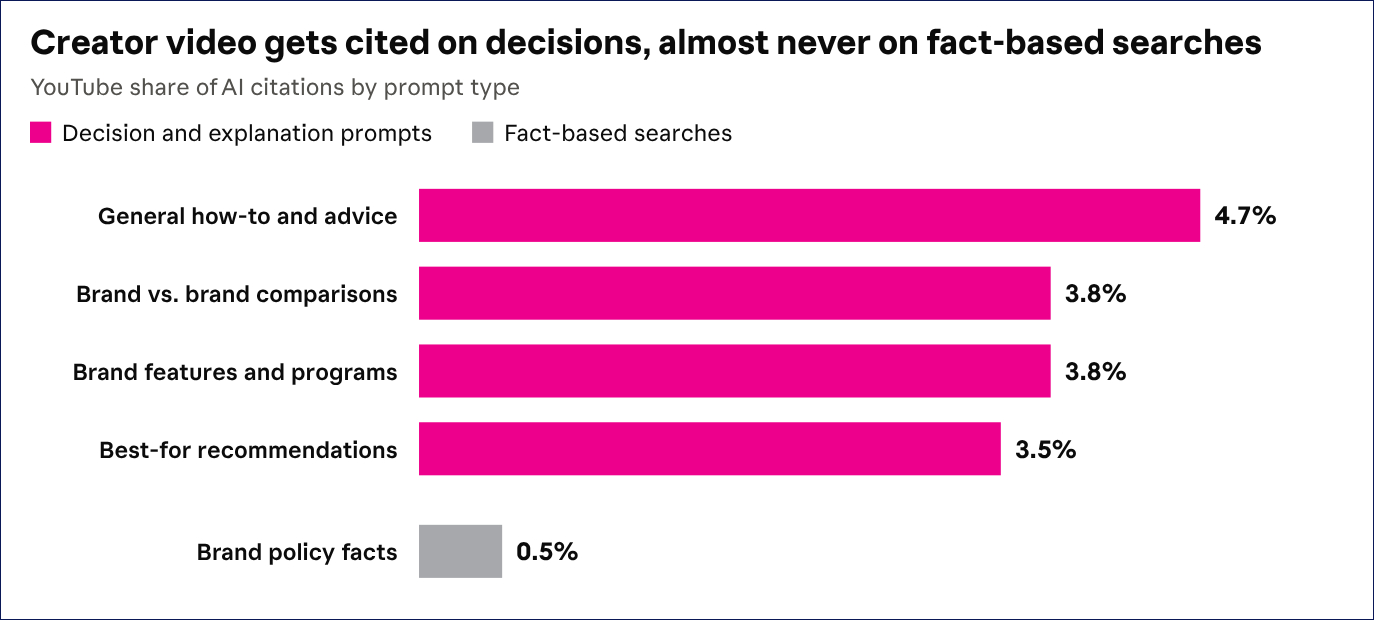
For a travel brand, YouTube videos made up 3.5% to 4.7% of the sources AI engines cited when people asked for advice, comparisons, or recommendations, like how to find a deal or which brand is a good choice for families. When people asked for a fact, like a fee or where the brand operates, YouTube made up less than 1% of the sources cited. Creator content matters most when people are weighing options.
6. Each engine finds customer opinions through different sources
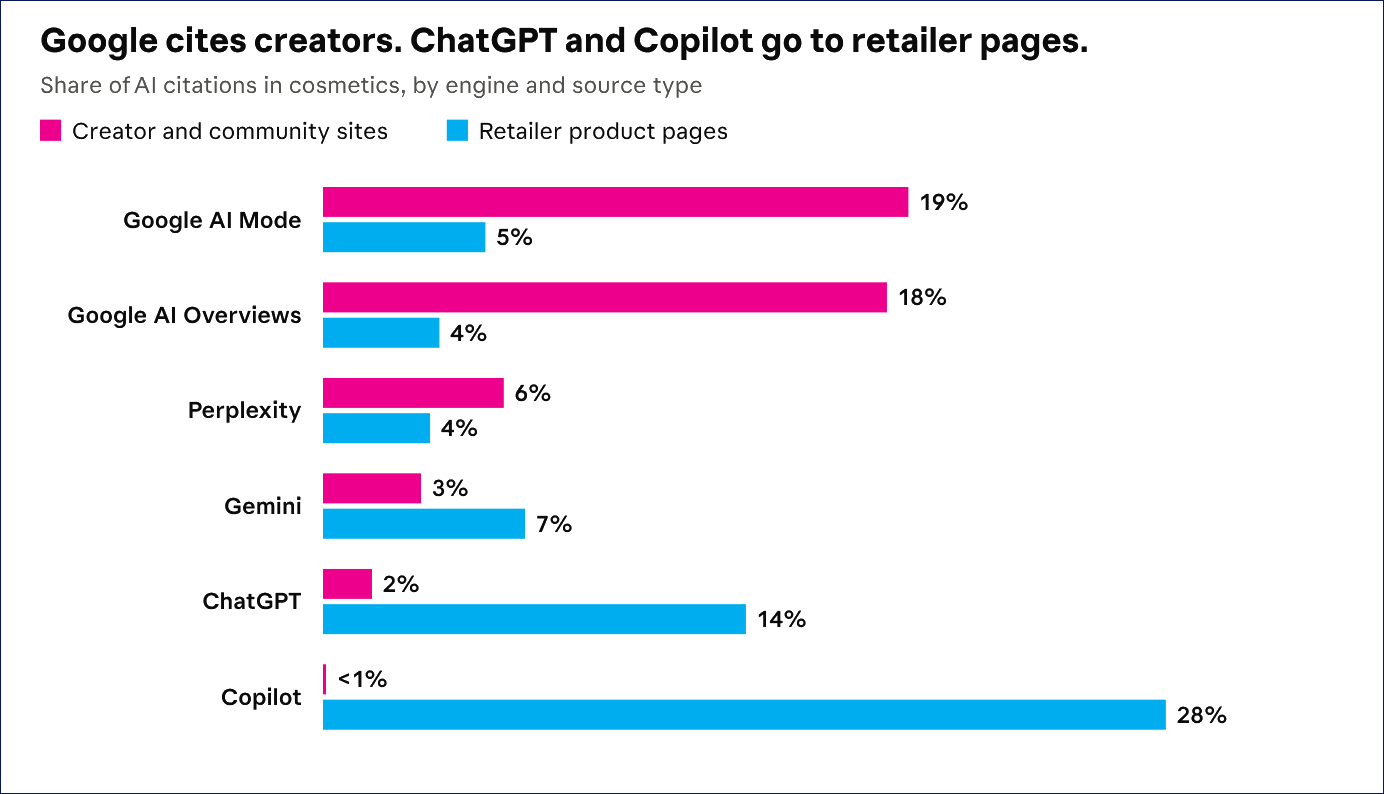
In beauty, creator and community sites earned 18% to 19% of Google AI Mode and AI Overviews citations but only 2% of ChatGPT’s. ChatGPT and Copilot cited retailer product pages instead, at 14% and 28%, respectively.
Eight Ways to Integrate Creator Partnerships with Answer Engine Optimization (AEO)
1. Brief from query fan-outs
Pull the query variations behind your priority prompts and turn the ones where your brand is missing into creator topics. Ask for tested reviews and head-to-head comparisons with a clear verdict, since that format earns most video citations. Where brands don’t cover these topics, faceless roundup channels already earn up to 23% of video citations.
2. Match the messenger to the claim
Seek out credentialed experts when the prompt asks whether a product works or is safe, and creators when it asks how something looks, fits, or wears. Use your own channel to explain how your products and programs work.
3. Make videos readable
Have creators say brand and product names out loud. Publish accurate captions, chaptered descriptions, and titles that match the prompt, because an AI engine can only cite what it can parse.
4. Put paid media spending behind the best creator content
Meta partnership ads and TikTok Spark Ads extend the life and reach of posts that already earn citations.
5. Get reviews onto the pages engines cite
When working with sampling and review programs, ask reviewers to post on retailer product pages, Google Business Profiles, and booking sites, since ChatGPT and Copilot reach customer opinion through those pages. On your own product pages, add reviews, Q&A, and customer photos with structured markup.
6. Show up in communities honestly
Creator and employee participation on Reddit and forums matters most for Perplexity and Google AI Mode, which often rate content highly when it involves direct participation by brand-affiliated creators or company representatives. Proactively disclose every affiliation to avoid being accused of astroturfing, which damages the trust you’re trying to build.
7. Watch the review and complaint sites
These pages carry most of the negative language engines can draw on. Monitor them, respond to recurring complaints, and fix the issues behind them.
8. Measure it as one program
Track citations to creator URLs next to reach and engagement. Report them together so the creator team gets credit for AI visibility.
Taking Action
AI engines build their answers from what creators, experts, and customers say about a brand. That makes the creator brief one of the most important AI search documents a brand writes. Brands that plan creator, review, and AEO work together show up in more answers and have more control over the way they’re described.
Our approach at Wpromote x Giant Spoon brings together organic and creator teams to plan this work as one program. Talk to us about bringing your creator strategy into your AI search plan and building your brand from the bottom up, through what creators and customers say about you.