Archive for the 'Microsoft' Category

Microsoft Going Stallone on Yahoo

Monday, July 7th, 2008

If the Yahoo/Microsoft saga followed the storyline of the classic movie “Over the Top,” this latest move by Microsoft would be most analogous to the moment when Stallone switches his grip, puts on his “Rambo” face, lets out a boorish groan and turns the tide on the poor sap on the other side of the arm wrestling table.

At this moment in “Over the Top,” the audience remembers that Lincoln Hawk isn’t just a down-on-his-luck big rig driver, he’s Sylvester freakin’ Stallone!  We’re talking about the man that took on Mr. T and Hulk Hogan in a single movie, the guy who single-handedly blew up half of the US military.  At this moment, we all know that Stallone isn’t going to lose and that the new big rig and, for some weird reason, custody of his estranged son, would be his very shortly.

Just when you counted him out, he flips the script and reminds you why it was foolish to ever doubt him.

In this scenario, Steve Ballmer and Carl Icahn represent Stallone.  In this scenario, it looks like Jerry Yang and Yahoo’s Board of Directors represent the guy who entered an arm wrestling match that they never stood a chance of winning.  Yang has insisted time and time again that the Yahoo/Microsoft deal was dead.  Each time he did so, flurries of articles followed confirming this notion.  Sure, Yang and Co. still had a lot of work to do, but it seemed that they would be moving on with Microsoft left in their wake.

When a deal with Google looked imminent, it seemed that Yang and Co. had Ballmer and Icahn’s wrist just centimeters from the mat.  At this point, though, we had made the mistake of forgetting why Ballmer and Icahn are Ballmer and Icahn.

Here’s where they switched the grip and changed the game on Yahoo.

Today, Icahn released a letter in which he indicated that the deal was far from dead.  In essence, he wrote, “…if a new board were elected, [Ballmer] would be interested in discussing a major transaction with Yahoo.”  Microsoft followed with an announcement declaring that Icahn’s statements were genuine; that Microsoft supports the shareholders right to form their own opinions as to the direction of Yahoo as a company.  The indication, though, is made very clear that the new direction (i.e. a Microsoft takeover) would include neither Yang nor the current members of Yahoo’s Board of Directors.

Yahoo’s response–and the fact that stock prices seem to jump up only when talks of a merger renew–cannot be comforting to Yang and the Board.  It seems that a possible merger of Yahoo and Microsoft is still very real and, when you really think about it, would you really want to bet against Ballmer and Icahn if the two of them share a desire to unite the two Internet giants?

Lincoln Hawk’s hat is spun around backward.  He’s arm wrestling for the championship and he’s just switched his grip.  The look in Hawk’s eye is familiar from so many other Stallone movies.  Tell me, knowing all this, would you bet against him?

[Thanks to CNET News for their fantastic coverage of the Yahoo/Microsoft saga]

Anything You Can Do, Icahn Do Better

Monday, June 9th, 2008

Amid the ongoing tumult in the saga of the potential buyout of Yahoo by Microsoft, Carl Icahn has done his best to make sure that his opinions do not go unnoticed.

The multi-billion dollar man who has made it his business to seemingly bully struggling companies into succeeding –all while making a hefty profit for himself in the process–has made Yahoo his most recent and most newsworthy project to date. What still remains uncertain is whether Icahn’s efforts are helping or hurting not only a potential merger between the two behemoths but also the general welfare of Yahoo, of which Icahn owns 4.3% in stock. Since purchasing his stake, Icahn has vocally undermined current CEO Jerry Yang, criticized the handling of the Microsoft buyout offer and generally disagreed with the direction that Yahoo has been taking as a company in a series of bilious open letters to the Yahoo board of directors.

What is clear is that Icahn wants one thing: to make money on his investment in Yahoo. What is also clear is that he believes that the only way that this can be accomplished is with either a sale to Microsoft or with a complete change in the current administration at Yahoo. The former is the route that Icahn would most like to take, however, the latter is an option at which the staunch Icahn is unlikely to balk. What is unclear is the efficacy of Icahn’s campaign. His attitude has more than ruffled Yang’s feathers and the two have been exchanging sorties throughout the process. In the battle of the billionaires, though, there seems to be one notable absentee, namely, Steve Ballmer, Microsoft’s brash CEO.

In a letter to Yang on May 3rd, Ballmer made it abundantly clear that he was very disappointed in the way that Yahoo had addressed the buyout offer from Microsoft, which he deemed “the only alternative put forward that provides [Yahoo's] stockholders full and fair value for their shares.” Although Microsoft has not completely dismissed the idea of a partnership with Yahoo, it is interesting to note that Ballmer has stayed mum since his letter over one month ago.

At this point, the loudest voice in the room is neither that of the CEO of Yahoo nor Microsoft, but rather that of Carl Icahn. Whether or not one believes Icahn to be right–and he certainly has his supporters among Yahoo shareholders–one has to wonder whether or not this seasoned but souring veteran of the business world is increasing or decreasing the likelihood of a merger. One look at Icahn’s track record inspires confidence that he not only has done this before, but he’s well-equipped to do it again. However, with three multi-billion dollar egos involved in the decision-making process regarding two of the Internet’s most prominent brands, it remains to be seen if Icahn is up to the task this time around.

Only the future will tell for sure, however, it should be noted that Icahn’s success or failure in this arena will most certainly go down as either his greatest achievement or his biggest flop to date. At the very least, we will get an answer to the question: what is the best way to catch billionaire flies? Convention suggests that honey is your best bet, although Icahn seems to be betting big on vinegar. If he ends up proven right, it could change the way that business is conducted between the Internet’s power elite.

SMX Advanced 2008 in Seattle, Washington - KRONiS Update.

Friday, June 6th, 2008

SMX Advanced - Seattle, June, 2008

This Year’s Seattle Search Marketing Expo (SMX Advanced) conference was great, aside from the uncomfortable red chairs it went off without a hitch.

Space Needle Seattle

⁃ Monday night started with a Microsoft sponsored party that had great catering, a DJ and great hors d’oeuvres. It took place close to the conference at the Olympic Sculpture Park.

They were offering to take pictures of people for fancy luggage tags (branded by Microsoft of course) which was funny to watch as people were drinking from an open bar and taking silly photos.

Olympic Sculpture Park, Seattle, WA

Many of the well known SEO companies were present and it was a nice start to the conference, I found some people I had met at SXSW and SMX Long Beach and the networking had begun.

It did rain the entire time, but that’s alright as we were inside the whole time anyway. Looking for cabs could get you wet and annoyed, but at least there were lots of ‘Vancouverish’ trees everywhere and it was a beautiful location on at the Bell Harbor Convention Center.

The three major search Engines, Google, Yahoo and MSN Live finally announced some clarifications on how they treat the Common REP (Robots Exclusion Protocol) Directives.

Yahoo Search BlogSee YAHOO!’s blog about REP Directives.

Google Webmaster Central Blog

Google’s Webmaster Central Blog re: REP Directives.

MSN Live Search Webmaster Central Blog
MSN’s blog about REP Directives can be read here.

There were some different answers regarding how the SE’s treat things such as the ‘nofollow’ attribute in links.

SMX Advanced Conference PanelsThe MSN crew at first didn’t seem clear on what their own standards were, however at the end they did clarify that they don’t do anything different for nofollow links at this time. I’m still confused by their confusion. Good old Microsoft!

Google: - Were very clear that they don’t use noindex, nofollow for discovery (finding new content to index or at least store somewhere)

Yahoo: - Confirmed they do use nofollow links for Discovery.

I think the way to go here is to follow the industry leader, Google and do what they say and suggest.

For example, Yahoo! was really pushing the use of Yahoo Site Explorer to provide rewrites for URLs that are not SEO-Friendly - This will drive tons of traffic to Yahoo Site Explorer but I think its a pain in the ass to be honest. Plus the Yahoo folks didn’t even know how to use the microphone or speak in a way you could hear them, at EITHER panel I saw different Yahoo! folks at.

Google’s reps put on their ‘Google faces’ and obviously had public speaking training and were very easy to understand. Google’s Maile Ohye recommended that you take care of your own canonicalization issues using cookies for session IDs and putting the exact URL in your sitemap of canonicalized pages.

Friends as SMX Seattle

Pictured here is Maile from Google with Michael from Penwell, Colin and Pete from the UK and Mike from San Diego. I rolled with this fun crew most of the time, pictured here at the SeoMOZ party. Kudos to Jane and Rand’s crew for always being easily accesible to discuss SEO and for giving out sweet shirts and hoodies. - Back to the technical stuff…so this this can seem rather confusing…USE the sitemaps and tell Google which versions of pages to use. The key here is to put the canonical version IN the sitemap, NOT the human readable version and 301 the canonical page to the SEO friendly URL.

i.e. http://www.example.com/prodinfo.asp?number=CF300%2D006 would go in the xml sitemap.

And you would 301 redirect to http://www.example.com/human-readable-page.html

Obviously…

http://sofia.usgs.gov/virtual_tour/images/photos/enp/enp_road.jpg

There’s a long road ahead of us but at least the Search Engines are finally starting to try and work together to provide standards for webmasters to follow that are the same for each engine. Google is obviously way ahead of the pack on this one.

Another interesting and completely unrelated topic was when a presenter explained this: How do you explain the word ’spicy’ to a child that has never tasted spicy? It is pretty much impossible without ever tasting something spicy….he also mentioned how the dictionary is a circular reference…A book full of words describing other words…circular. You would be able to point to a tree and say that physical thing over there is a tree…but without that the words describing it are all defined inside the ‘circular reference’ of the dictionary. I never thought if it that way…one for all the nerds out there i guess…

BUZZWORD: Progressive Enhancement

Some of you may not know this term. The Wikipedia definition is as follows:

“a strategy for web design that emphasizes accessibility, semantic markup, and external stylesheet and scripting technologies. Progressive enhancement uses web technologies in a layered fashion that allows everyone to access the basic content and functionality of a web page, using any browser or Internet connection, while also providing those with better bandwidth or more advanced browser software an enhanced version of the page.” - Source - Wikipedia

It is now recommended to start websites over using this methodology to make them accessible at every level rather than try to implement backwards changes to your existing sites.

Buying old Domains:

Some cool ways to find and buy old sites without losing their historical strength in Google were discussed. The goal is to use a TRUST to keep the WHOIS information the same, and to also buy the hosting account from the owner as well.

The way to do this if you do NOT want to see the WHOIS information change is to do the following three things.

  1. Get a Lawyer and establish an intent to create a trust.
  2. Make sure the certainty of the property - Take inventory and it is a wise idea to include the hosting as part of what you are buying to avoid any WHOIS changes.
  3. The Object is the beneficiary.

So what does this legalese mean?

- Well I’m not a lawyer but the general idea here it to use legal means to ensure that the WHOIS registration does not change and it is also highly recommended to also purchase the hosting account from the current owner of the domain.

If you are interested in this I recommend checking out Seoroi.com who presented this at SMX Advanced.

H1 tags - only one per page? that’s what all the SEO’s say, but really why? any proof?

So I had an opportunity to discuss an issue about H1 tags that my company was having with Matt Cutts who is very easy to talk with and obviously passionate about his work at Google. Even during one of the panels he was sitting with some of the folks I was hanging with and was very helpful with his little notepad describing how Google does specific things that would affect the sites he was asked about.

Matt Cutts with Michael K explaining duplicate content solutions.

At the end of it all we pretty much agreed that, - Matt even said this - “You don’t need Matt Cutts”. The reason is that it is at this point pretty obvious when something is shady or not. If the work you are doing is for the search engines and not for the users and affects the user experience than it could be risky.

Matt Cutts from Google talking with SEO Aaron Kronis

(Matt Cutts discussing use of multiple H1s on pages with Aaron Kronis) and using his diagram pad as always.)

We discussed the issue that our programming team here at Wpromote is having with regards to the use of H1s at the beginning of sections rather than reserving it for just the main page header.

Almost every SEO I know swears by ‘One H1 tag per page with the top keyword phrase for that site in it’ and here Matt said that it was alright to have MULTIPLE H1s on the page as long as you don’t stuff too many keywords into the H1 tags and design the site for the users.

My question to any SEOs out there (thanks to Merlin for pointing this out btw) is that other than all the SEOs saying to only have one H1 per page, where is this proven to be any different then if there are multiple H1s used at the heading of each section the way the H1 tag was designed. This reserves H1-H6 for usage if needed - great for automated pages and sites… the limit of the H1 to one usage can change the programming and possibly cause you to run out of Hx’s if you get up to the depth of H5 o H6 and have used up your H1 at the top of your pages. Not super critical but nonetheless not very well explained or documented in the SEO community.

Other things to note - if you are using IP Delivery (Cloaking) then the content you serve the search engines MUST be the same as the media you are normally serving users. i.e. the text of the flash better look like the text you send Google or you will be booted from the index. The question was asked “Can you describe the video that is in flash?” the answer from the Search Engines was ‘NO - you may use a static image however’.

- So if some of this was a little dry, there’s a lot of new exciting things going on in the SEO community and with the new tools that Wpromote are developing (thanks to CP) for our SEO division will really help us out with getting the best results for our clients. Welcome to the next generation of Internet Rockstars who know how to use Progressive Enhancement to build search friendly and great user-friendly websites.

I missed the SeoMOZ party but I had to get home…back to LA.

wing-sunset

Taken on the final approach to LAX looking off the edge of the world.

-KRONiS

Microsoft Cashback

Thursday, May 29th, 2008

I just wanted to get this out there before it becomes old news. Last week Microsoft made another bold move to gain market share in the search industry. After running some Beta tests last year, Bill Gates announced they will be pushing forward with their Microsoft Live Search Cashback program. In short, advertisers in the e-commerce division of search marketing (e-commerce accounts for 30% of searches, but 80% of search revenue) can now switch to a Pay Per Action model instead of Pay Per Click. Translation: advertisers can set a bid for how much they’re willing to spend when a search query turns into a sale. With 61% of e-commerce purchases originating in the search engines, this is a significant move. In addition to basically guaranteeing the advertiser is getting some business for their click money, Microsoft also created an incentive for the shopper.

To draw people like you in, Microsoft decided they would offer Cashback savings to users who buy using their engine. What does it all mean? Microsoft will basically pay you to shop with them/pay you not to use Google. During the shopping process, in addition to browsing to find the lowest prices, their results page will show which purchases quality for the Cashback program. After the purchase is made, they will deposit the amount listed right into your account, no hassles. While this is a bold move (and one that is highly unlikely to generate much revenue), the beta tests did help them accomplish their goal last year: gain search market share. During the beta-tests, Microsoft’s market share jumped from 10.2% to 13.2%, a near 30% jump. With the new Live Search Cashback system in full swing, and even more straight-forward, we can expect an even larger increase.

For some screen-shots & more information, check out: Live Search Cashback

[Ctrl]+[Microsoft]+[Del]

Wednesday, May 28th, 2008

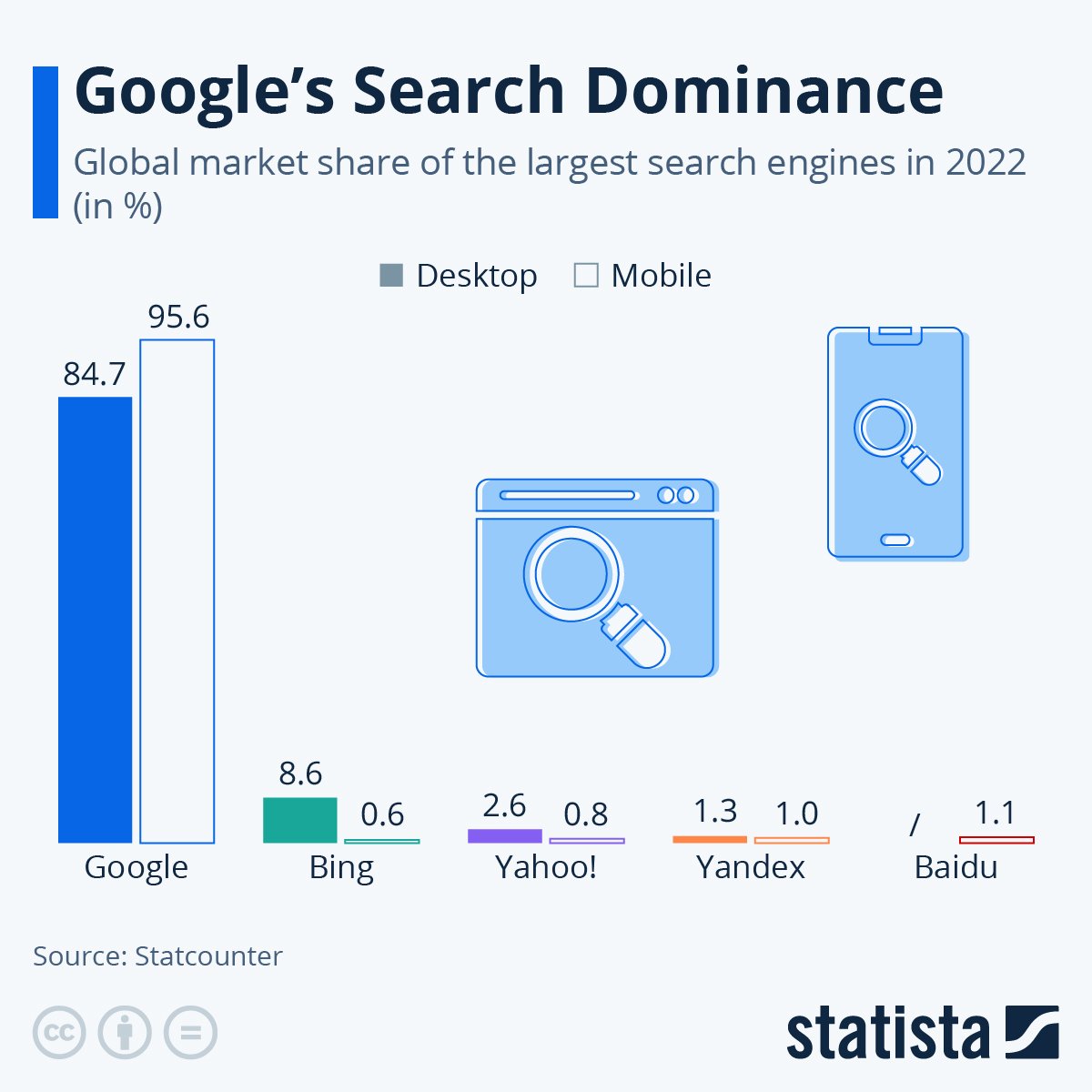
There has been a lot of discussion recently about Microsoft’s bid for Yahoo and subsequent bid withdrawal, followed shortly thereafter with talks of the possible acquisition of Yahoo’s search business. All of this hullabaloo begs the question, why? And the obvious reason is that Microsoft, and even Yahoo for that matter, lag considerably behind Google in the paid search advertising market. By buying/merging/acquiring Yahoo, Microsoft intends to give Google a run for its money.

I’m not sure anyone actually believes that this is possible, but more importantly does it even matter? The value of advertising online has been clearly realized by all involved, especially Google the dominant market leader. Why spend the billions of dollars and years of restructuring and R&D to take on an adversary well entrenched with a high ground position? If it was up to me, I wouldn’t. Instead I would rethink, regroup, and innovate. Forfeit the paid search empire to Google and move on to the display search market. Just so everyone is on the same page, a display ad is a graphical advertisement. It can be a static picture ad, video, or multimedia presentation. They aren’t dependent on what someone searches for, but rather are delivered by the content on the page someone is viewing or preferences the browser/site has cataloged about the user. In other words, highly targeted, pretty ads.

The paid search advertising market is still growing at an incredible rate, it’s expected to double by 2012, but display advertising is expected to triple in the same time frame. And right now there is no obvious leader in the online display advertising market. Display marketing will also attract brand marketers with extremely deep pockets, who right now have no real place in paid search. Companies like Budweiser and Coca-Cola.

There is a tremendous opportunity here for Microsoft to impose its still significant will and really capture an emerging market. Based on their track record I’d have a hard time betting in their favor, but the opportunity is there nonetheless.

So, To: Microsoft, shift your focus to display adverts and beat Google at their own game, only this time it’s a little more colorful, engaging, and altogether prettier game. Also, it’s a game you have a chance at winning.

Yahosoft Still a Possibility

Monday, April 7th, 2008

So, there’s good news and bad news from the Yahoo camp for Microsoft.

The good news is that Yahoo is definitely open to the idea of a buyout.

The bad news is that it’s gonna cost Microsoft much more than they originally anticipated.

Yahoo responded to Microsoft’s buyout bid by reiterating that the $44.6 billion offer undervalued the search engine and online mega-portal. Despite the fact that Yahoo share prices have recently dipped to well below the offered price of $31/share, Yahoo is confident that they can get more out of a potential buyer. Other names that have been discussed as interested in Yahoo include News Corp. and Time Warner Inc.

Personally, I’m not sure how I feel about the idea of Yahoo becoming the property of Microsoft. The effects on paid search would be difficult to predict. Many remember that Yahoo and Microsoft shared Overture as a paid search provider years ago and, since Microsoft broke away from Yahoo in mid-2006, the companies have moved in different directions in terms of the quality of their search products.

Although Google’s AdWords product is unmatched in terms of usability and efficiency, I think that it would be fair to say that Yahoo, especially since its move in 2007 to the “Panama” platform, has made significant strides to improve. Whereas Overture and Yahoo Search Marketing in its infancy were very difficult to use and were often easily ignored by users who frequently dedicated their entire search budget to Google, nowadays, we find that Yahoo is, at the very least, an excellent supplement to an active Google AdWords account and, in some cases, a flat-out better provider of quality traffic.

Microsoft’s MSN adCenter product, on the other hand, continues to baffle users and agencies alike. With an inefficient user interface, an inability to opt out of unpredictable traffic drivers such as a-list, and a still developing support staff, Microsoft has, in many ways, regressed even from the days of Overture. Who’s to say that Microsoft, despite its war chest of funding, wouldn’t simply degrade the quality of Yahoo’s product in the event of a takeover, leaving Google without any real competition? It’s a frightening possibility.

It’s unclear whether Microsoft will balk at Yahoo’s demand for a better offer or whether this was an expected move from the opposition in what will inevitably be a buyout. For search marketers, though, I feel that there is some cause for optimism in either scenario. If Microsoft does balk and Yahoo remains independent, I feel that it really puts the pressure on Yahoo to continue to invest in their search marketing product in an effort to narrow the usability gap between Google AdWords and itself. In the event of a takeover, I would hope that Microsoft would be more likely to integrate with Yahoo’s current model or upgrade their current system to include some of the improvements that Yahoo’s system offers. Microsoft is many things, but it is not a stupid company; we could potentially end up with a product superior to the current Yahoo and MSN products that integrates both engines.

The ball is back in Microsoft’s court. Unless they are ready to pony up more cash, Yahosoft remains purely fictitious.

**Update: There was an interesting BusinessWeek article backing Yahoo’s play of holding out.  Check it out.

Yahoo Rejects Initial Microsoft Bid.

Saturday, February 9th, 2008

Despite its very public financial problems, Yahoo has made the bold decision to reject Microsoft’s initial bid to takeover the struggling company for 44.6 billion, or $31 per share, according to The New York Times. Sources say Yahoo’s official response will be delivered on Monday, February 11th, ten days after Microsoft made its offer.

Yahoo’s board of directors met on Friday, February 8th to discuss the bid but a clear strategy for moving forward has yet to emerge. However, Yahoo executives feel the company is worth more than 44.6 billion, and remaining independent is still a potentially viable strategy. Likewise, working with Google is still a possibility. Yahoo executives are also considering the antitrust challenges it would likely face in either scenario.  According to NPR, a merger with Microsoft would give the new entity an estimated 30% of the market share in search.

Oh, the irony.

Monday, February 4th, 2008

Likely you have heard about Microsoft’s bid for Yahoo by now…

Yahoo

It was announced on Friday, February 1st to a slew of commentary.

While I lack any new insight on the pending merger, I do find this hilarious.

Is Google really suggesting that a Microsoft/Yahoo merger would compromise the open nature of the Internet? I agree that Microsoft screwed the PC market. I’m both a MAC and PC user and I am currently looking to purchase a new home PC. It is frustrating to be forced to choose between buying a newer model PC installed with Microsoft’s new and bug-laden Windows Vista OS or paying more for an older model PC installed with the time-tested Windows XP. It is my opinion that an unfair abuse of power underlies Microsoft’s sales strategy. That being said, with Google’s domination of search and its increasing influence over the all things Internet, I find it ironic that Google would say Microsoft is challenging the openness of the web.

There may be more to Google’s interjection than meets the eye, however, as the New York Times reported today. And as consumer and someone who works online, I would prefer that Yahoo remain an independent entity. I wouldn’t even mind if Google helped raise the funding to make an independent Yahoo possible, and whether or not that would benefit Google is less of a concern to me than what might happen if Microsoft and Yahoo merge. Yes, I think it’s ironic for Google to call out Microsoft on its history of antitrust troubles, but in the end, if it came down to choosing between Microsoft/Yahoo and an independent Yahoo by way of Google, I would choose the latter. Then I would go buy a PC. Go figure.

Mark Zuckerberg Just May Be Brilliant

Friday, October 26th, 2007

Well, I can admit when I was wrong. And a year ago, I told everyone that would listen that Mark Zuckerberg, the 24-year-old founder and CEO of Facebook, was greedy and crazy to turn down an alleged $1 Billion acquisition offer from Yahoo! I was wrong. He was right.
At that point Facebook was losing ground to competitors, MySpace was continuing it’s domination of the social networking space, and the kid had just walked away from a deal that could have made him worth $300 Million.

Since then, Facebook opened up their network to all users, and last spring launched Facebook Apps, a brilliant model that instantly created an ecosystem of developers seeking ways to expand their reach into the uber-loyal Facebook crowd (MySpace is playing copycat with a developer network of it’s own shortly on the way). They are gaining a million new members a week, and half of Facebook’s users are on the site daily. While it is unclear exactly how to monetize that usage, the potential is clearly enormous.

Combine the explosive growth of Facebook in the last year with the hyper-competitive acquisition market that have sent valuations soaring (DoubleClick bought by Google for $3 billion, aQuantive by Microsoft for $6 billion and Right Media by Yahoo for $800 million), and you end up with the seeds that grew Facebook into an absolutely astonishing $15 Billion valuation.

A valuation growth of $1 Billion to $15 Billion in about 12 months? Not bad, not bad at all…

Well played, Zuckerberg.

Acquisition Fever Continues: Yahoo purchases Zimbra

Monday, September 17th, 2007

As reported today, Yahoo! continued the recent frenzy of acquisitions by purchasing Zimbra, a popular maker of an email and calendar suite, for a cool $350 million in cash. This seems to be capping off a flurry of activity by interim Yahoo! CEO Jerry Yang who took over after the departure of Terry Semel.

This is a very, very smart acquisition in my opinion. Yahoo! currently is heavily invested in the e-mail space, with the Yahoo! mail system counting over 250 million users worldwide. I imagine the purchase will allow Yahoo! to leverage much of Zimbra’s excellent email, calendar and collaboration technology, already popular among it’s educational and corporate clients.

This purchase is setting up what will turn out to be a bloody battle of the desktop and the home page:

  • Google’s much-loved Gmail faces off with both Yahoo’s much-improved new web-email offering and Microsoft’s Hotmail product. As the web-based email reaches new levels of usability, Microsoft Outlook, the king of corporate email, suddenly doesn’t look so invincible.
  • Google Apps is a direct shot at Microsoft Office, and Zimbra’s collaboration and calendar tools l