With the possibility of a TikTok ban looming, some marketers may feel like the sky is falling, especially if they’ve started to really take advantage of TikTok’s superpowers as a central stomping ground for niche communities that brands want to connect with. A world without TikTok might seem scary; after all, according to eMarketer, users spend more time on TikTok and YouTube than Facebook and Instagram. But it doesn’t have to be.
The world is more connected than ever, which means there are more alternatives to try and test. In fact, new social platforms are popping up daily, and established channels are adding new capabilities. As new platforms grow and find their audiences, they represent an opportunity for brands to get in on the ground floor. For other platforms, it might be worth giving them a second try.
We’re not saying there won’t be challenges; like any good experiment, there will be hiccups and pitfalls on the path to success. But that’s how we learn what works. That’s why it’s time to embrace the new and meet niche communities where they are so you can form the kind of authentic connections that result in lifetime customers.
What emerging social media platforms are key for reaching niche communities?
Regardless of how loyal the users of different social platforms are, we’ve already seen evidence that users will jump ship if the platform is in trouble. According to eMarketer, Twitter is expected to lose approximately 8 million monthly US users between 2022 and 2024 thanks to Elon Musk’s turbulent takeover.
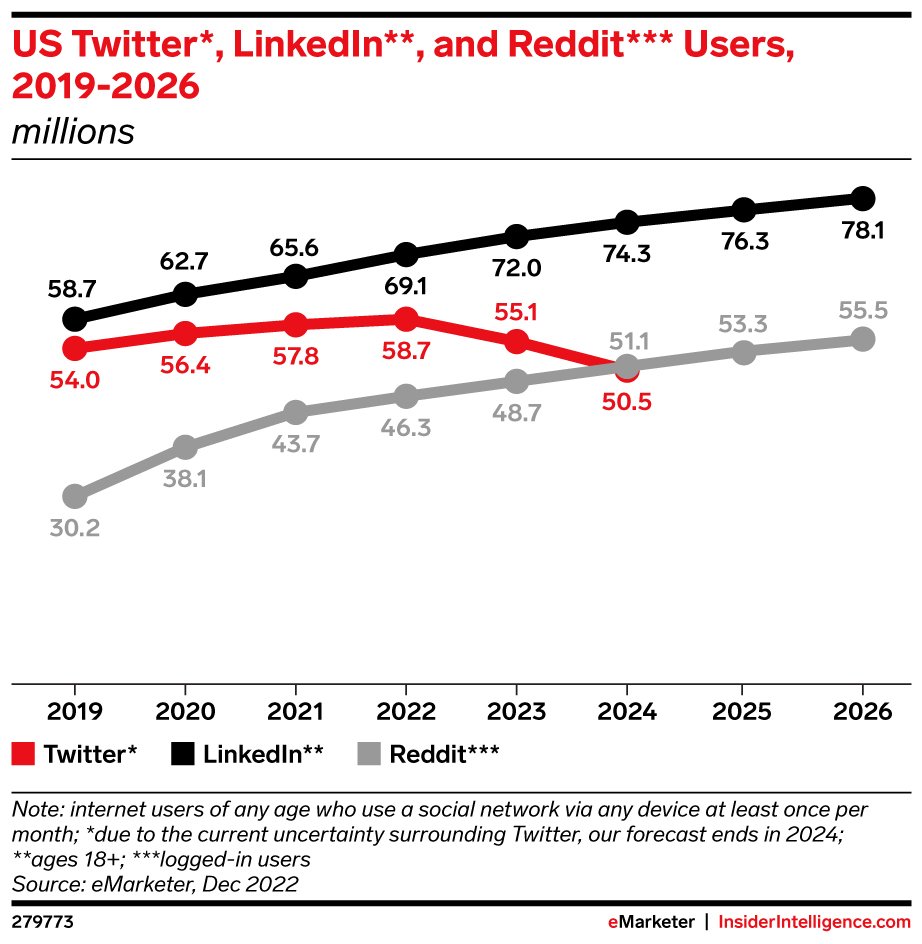
- Source: eMarketer
With TikTok’s future still up in the air, you need to take a look at which other platforms can fill the same purpose brands loved about the platform in the first place. Right now, the most important emerging social platforms from a community-building point of view are:
- Twitch
- Discord
- BeReal
- Mastodon
- Lemon8
While none of these will be a perfect 1:1 replacement for TikTok, they each have their own unique strengths and challenges. So before you throw all of your time and money into a raft of new platforms, you need to start by understanding what they are and how they work so you can make the right decisions for your brand.
Evaluating Niche Social Media Platforms
Reddit: the established social base of niche community-building
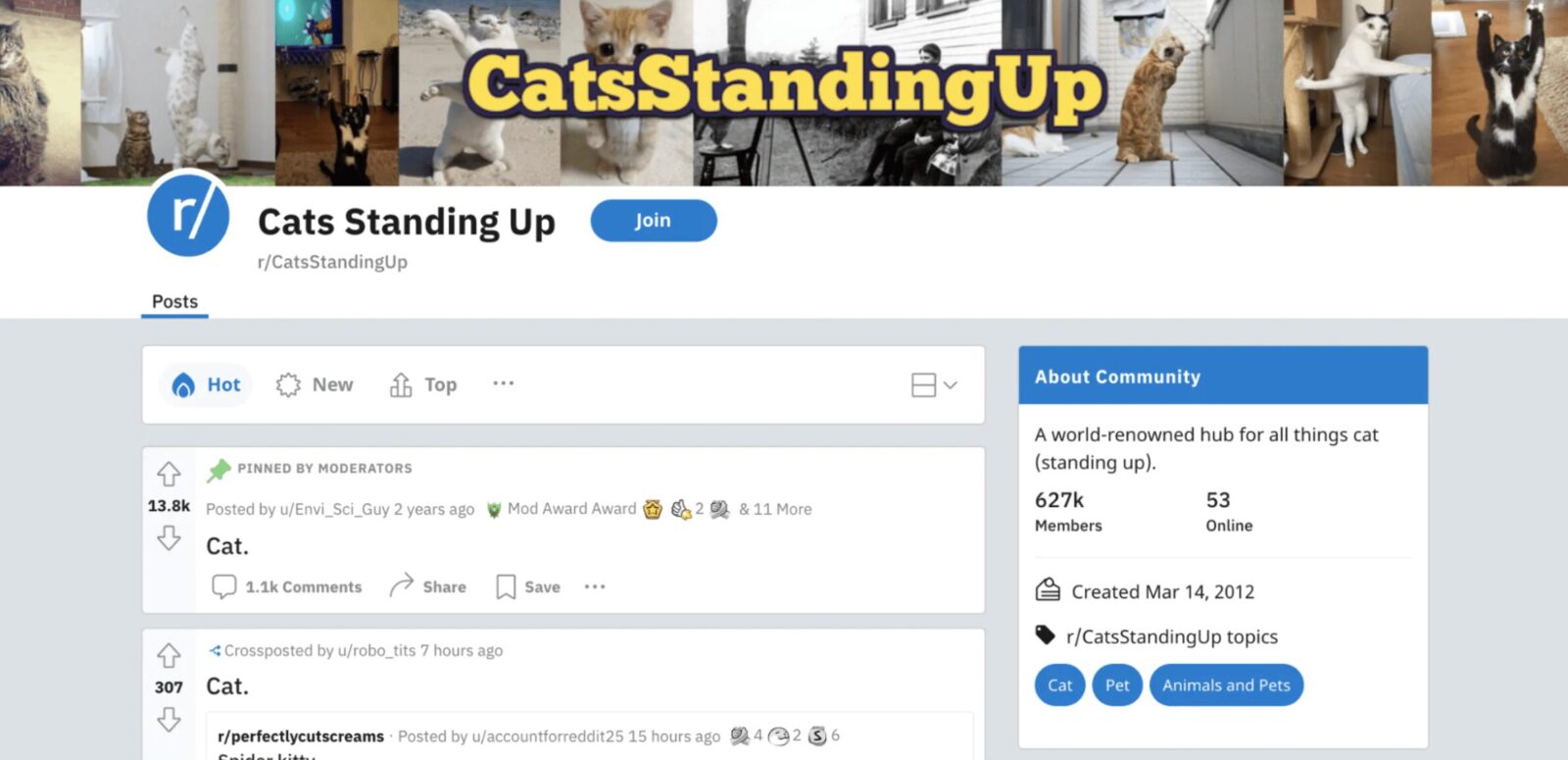
Reddit, of course, isn’t technically an “emerging” platform. But it would be foolish to not take the platform into consideration; after all, communities are the reason Reddit exists at all. Built around topics instead of people, Redditors know who they are and go to the platform to talk about everything from products and celebrities they love to recommendations and things they hate.
Strengths:
- Unique target audiences: With over 100K+ (and growing) active communities on the platform, you’ll be able to find just about any audience you want to target. Not only that, these communities are passionate about their interests: just consider the 13B+ posts and comments across the platform.
- Full-funnel capabilities: Reddit ads aren’t limited to just one kind of KPI. Whether you’re looking to raise awareness, increase traffic or conversions, get video views, or drive more app installs, there’s something on the platform for you.
- Interest-based targeting: Because Reddit has traditionally been a fairly rough-and-tumble platform (even with a significant investment in moderation), brands are often understandably nervous about engaging on Reddit. But the platform employs granular interest-based targeting so you can choose where and how your message appears, so you don’t have to worry quite so much about brand safety.
Challenges:
- Staying open-minded: Marketers are notorious for having an itchy trigger finger when it comes to deleting negative comments about their brands, especially if a conversation seems like it’s going out of control. But Reddit is all about open communication and you shouldn’t try to police the conversation. Use what makes Reddit unique to your advantage versus trying to make it into something it’s not.
- Skeptical user base: By now you’re probably tired of hearing how “anti-advertising” the Reddit community is. Regardless of how you go about things, users can respond in real-time and will upvote/downvote what they like and what they don’t like. There’s even a subreddit dedicated to sniffing out brand placements across the site. The challenge is to get creative when utilizing the platform to win over an ad-skeptical crowd.
Twitch: expanding beyond gamers to bring livestreaming to the masses
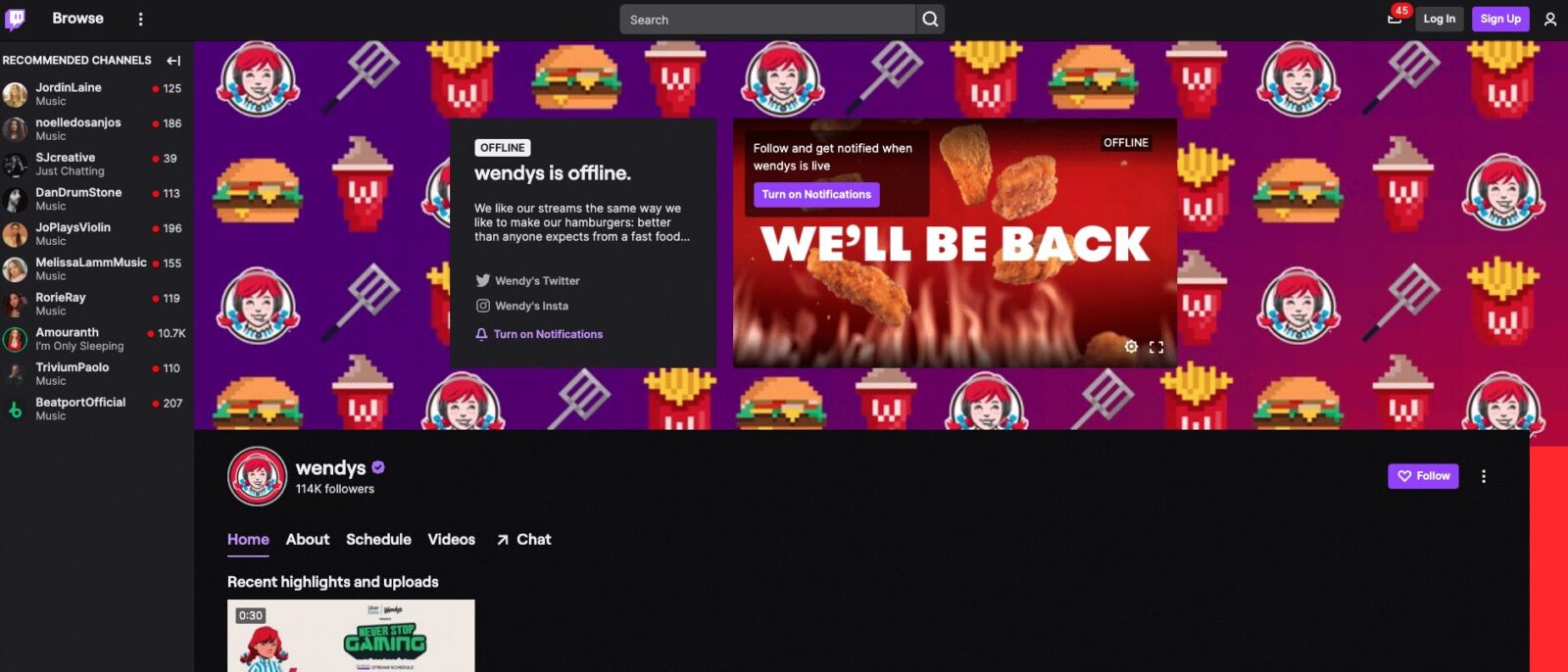
Known primarily for its popularity with gamers, Twitch is more than just an outlet for people to stream gameplay. Operated by Amazon, the video live-streaming service is expanding; in addition to gaming, the platform offers esports competitions, music, creative content, and IRL streams. According to internal data from Twitch, 7 million unique streamers go live on the platform each month.
Strengths:
- Community-first approach: Twitch lets creators and their followers engage and react in real-time, with Twitch reporting that more than 68 percent of viewers chat with the community. Contrary to popular belief, the platform isn’t made up of passive interactions and offers a lot of opportunities for authentic interactions with your audiences.
- Multiple ad offerings: Twitch has a lot of different options for advertisers, including media native site integrations, display ads, brand partnerships/sponsorships, and pre-roll or mid-roll ad breaks.
- Emphasis on video: Thanks to Twitch’s SureStream delivery method (which stitches video creative directly into the broadcast content and reaches CTV, console, and ad block users on desktop), you can reach your audience where they are without it feeling intrusive.
Challenges:
- Limited verticals: Certain products, services, and content are prohibited from promotion on Twitch, including but not limited to healthcare, tanning, cannabis, politics, and payday loans.
- Opportunities are fleeting: Because live-streaming happens in real time, there’s a possibility that your audience may miss your ad entirely. There isn’t a way to replay content and audiences typically only watch streams once.
Discord: where communities go to stay connected
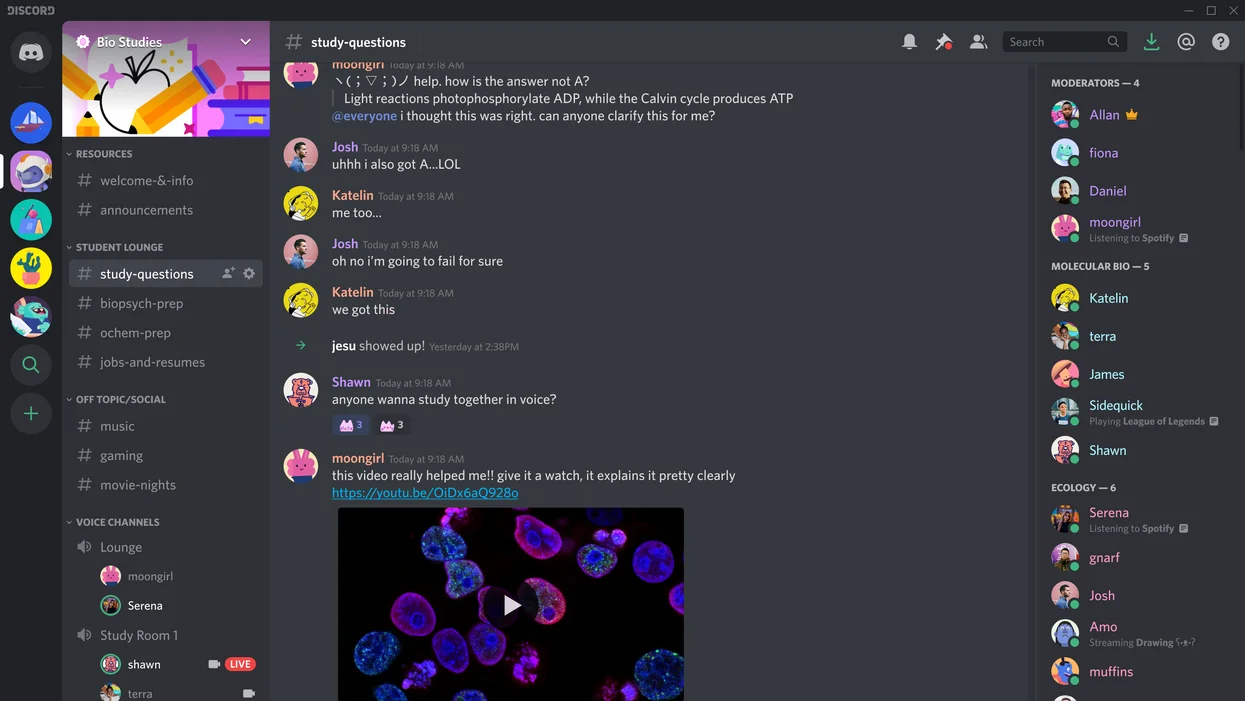
Discord is a community-powered voice-over IP (VoIP) that provides a space for people to connect and bond over topics they love. A mainstay of the gaming community, Discord has grown to 150 million monthly active users with 4 billion server conversations happening daily. Much like Reddit, if there’s an audience you’re looking for… there’s likely a server already ready and waiting.
Strengths:
- Strong audience relationships: Because it’s a server-based platform, brands can reach target audiences more directly and it’s easy to facilitate connections.
- First-class integrations: Discord prides itself on its ability to pair with almost any app you can think of. From social apps like Twitter, Twitch, and Facebook to Google, Trello, and Soundcloud, integration is just a click away. These integrations also allow for first-party data tracking.
- Customizable sub-channels: You can create your own brand server, then include different voice and text sub-channels so you can get more granular in your approach to audiences. You can also set up tiers and member levels across channels so you can offer special incentives to each.
Challenges:
- No native ad capabilities: Discord is technically an ad-free platform, so you’re limited in what you can and can’t do as a brand. It’s also hard to measure whether or not your “campaign” is successful.
- Heavy lift is on the brand: Since Discord is “ad-free,” it’s on your brand or business to build a server for the communities you’re trying to reach. You also have to remember that each server has different rules to follow and you won’t be in control everywhere.
BeReal: authenticity as the central value proposition
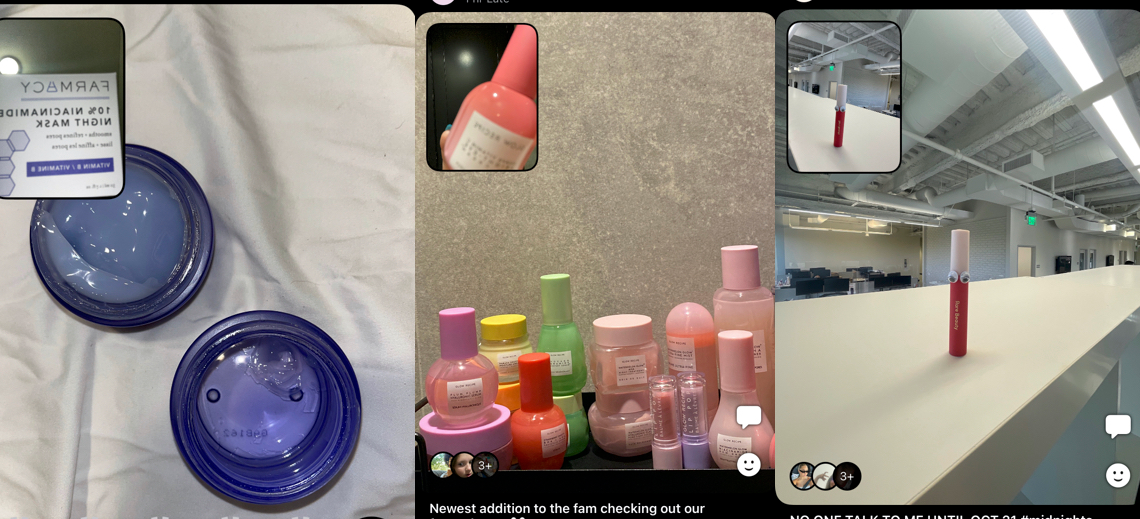
Photo-sharing app BeReal rose to popularity over the pandemic due to its pared-down offerings. Younger generations are particularly attracted to the fact that you can’t edit or Facetune the pictures you share. What you see is what you get.
Strengths:
- Authentic connections: All users can do on the platform is share what’s happening to them in real time. This gives you a unique opportunity to match your target audience’s level of authenticity and dig a little deeper into why they should love what you’re offering.
- Unsaturated market: Not many brands are taking advantage of BeReal’s 7.7 million active users. Those that do have a strong sense of tone and voice in place.
- Emphasis on native content: There is no room for overly polished or curated content on the platform and you only have 24 hours to capture your audience’s attention. An example of what works: Chipotle found success by sharing a special code that would give the first 100 people using it a free entree.
Challenges:
- Traditional ads are prohibited: Don’t expect to get any data from the users you interact with on the platform: it’s against BeReal’s terms to use the app to publish or facilitate the transmission of advertising, commercial solicitations, or spam, or to collect information, data, or content without permission. You’ll have to be creative with your strategy if you’re to be successful.
- Lack of new offerings: BeReal has largely stayed the same since it caught on with Gen Z in 2021. Some users feel like the platform has become stale and looking for the next big platform elsewhere.
Mastodon: the new alternative to Twitter
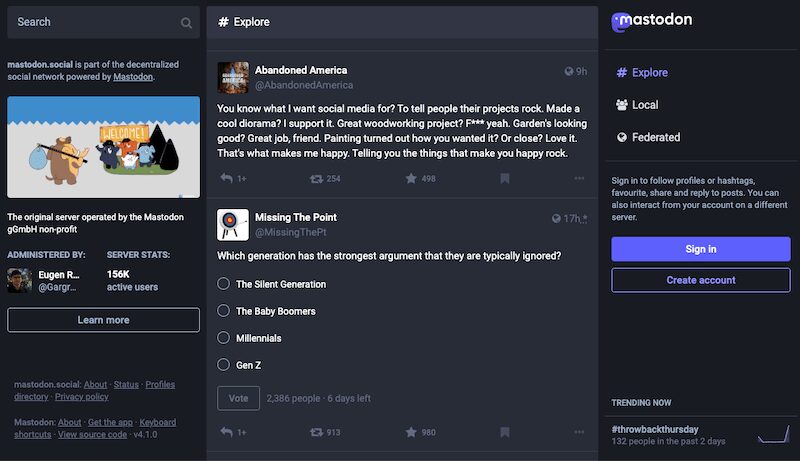
Similar to the old forums of yore, Mastodon is a decentralized social network made up of individual topic-based servers. Unlike Reddit, Mastodon puts an emphasis on networking and allows individual users to publish short messages (formerly called “Toots”) reminiscent of Twitter’s tweets.
Strengths:
- High engagement rate: In multiple user tests, Mastodon’s engagement rate clocked in much higher than Twitter’s, likely due to the lack of an algorithm pushing content. What you see at the top of your feed is what’s there without a hidden agenda. Traffic to Mastodon also surges every time Twitter is in crisis.
- Emphasis on authenticity: It might be a struggle to find influencers and you can’t run traditional ads, but because there’s no algorithm, you won’t be penalized for “low-performing” content. It gives your brand the chance to try some things out that might be risky on other platforms.
- Server-based platform: Much like Discord, you have to run your own server to make sure you have control over any conversations you’d like to initiate on behalf of your brand or business. Because it’s decentralized and server-based, it’s easier to find audiences where they are and get to know them better.
Challenges:
- Text-heavy interface: Although gifs, videos, and big images can be found on Mastodon, you often have to click through to see them. Most content sticks primarily to text so users don’t have to go through any added hassle to access the content.
- Can’t push content: Since there’s no algorithm in place and Mastodon’s platform is staunchly “anti-advertising,” don’t expect to be able to leverage paid media to push important content on anyone. You can highlight it within your own server, but that’s about it.
Lemon8: the alternative to TikTok (but also owned by ByteDance)
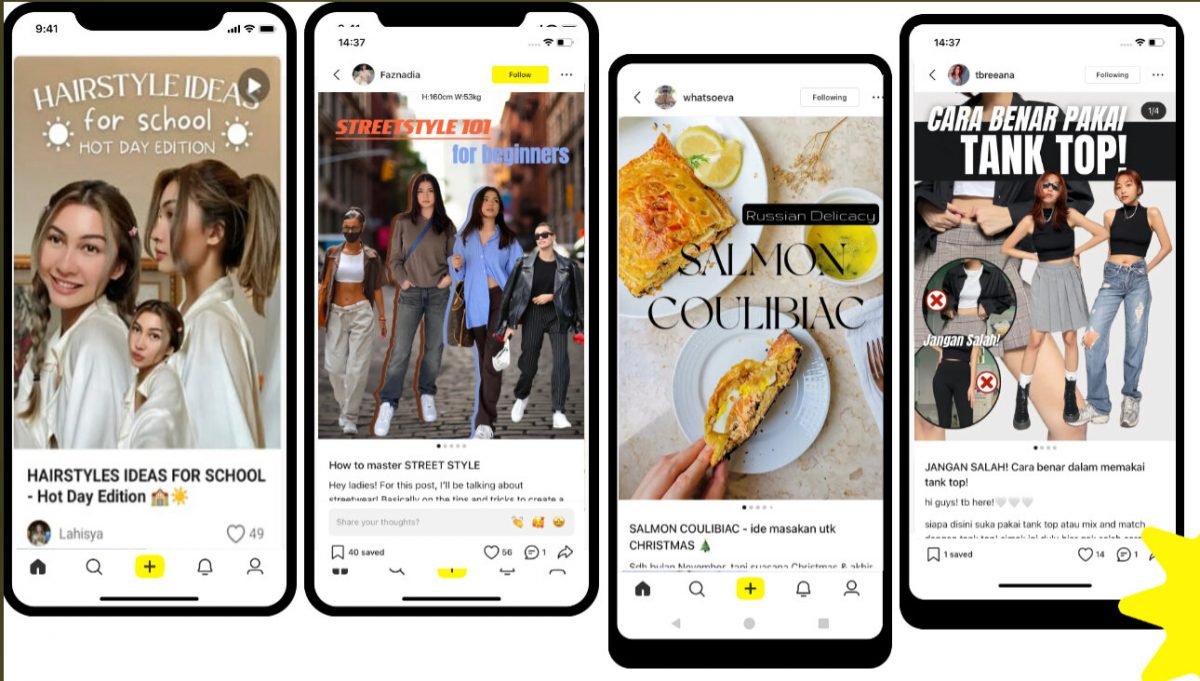
The photo-sharing app Lemon8, described as a mixture of Instagram and Pinterest, lets users follow friends and explore topics like fashion, beauty, and food. Lemon8 is currently building out its creator partnerships and looking like an increasingly attractive option for those worried about the potential loss of TikTok. Geared toward a younger audience, it could be a viable solution for those looking to connect with those demographics.
Strengths:
- Familiar algorithm: Owned by TikTok’s parent company ByteDance, Lemon8 has features and algorithms similar to the video app. This makes it user-friendly and an easier transition between apps.
- Growing user base: People are flocking to the platform; Lemon8 was one of the top 10 most downloaded apps during the last week of March 2023. As of last year, per the New York Times, the app only had 5 million users globally, but that number is growing fast.
- Focus on pictures: With its emphasis on fashion and lifestyle, Lemon8 could be a critical part of the discovery phase for brands in those verticals, since people use the app to find products as well as make recommendations and share reviews.
Challenges:
- Ties to ByteDance: Despite being labeled as a TikTok alternative, Lemon8 is also owned by parent company ByteDance. Does this mean that Lemon8 will also be subject to the same ban? We don’t actually know, but it’s a good idea to keep an eye on the discussions surrounding ByteDance before you move your TikTok campaigns over to another ByteDance platform.
- No verification system: The lack of verification (of any kind), means that regular users can claim brand handles for themselves, making it harder to distinguish what’s official and what’s non-official. That can be a potential source of confusion and a risk to brand safety. It’s also unclear how easy or hard it would be to acquire a brand name that has already been taken.
Right now, the possible TikTok ban is still an unknown. Whether or not it happens, consumer behavior is changing and, as certain social platforms begin to wane in popularity, others will inevitably rise. Moving your ad dollars or budget just because you’re in panic mode is never a good idea and can lead to more problems than solutions, but you should always be on the lookout for what’s new in the social space.
Keep evaluating your current social media mix to make sure it’s currently serving your needs or goals. Change can be a good thing: you just need to be thoughtful about the platforms you decide to use, stay alert to shifting consumer behaviors and preferences, and keep testing into new opportunities.
Ready to take a chance on a new social platform? Then check out our full guide to diversifying your social media mix.